
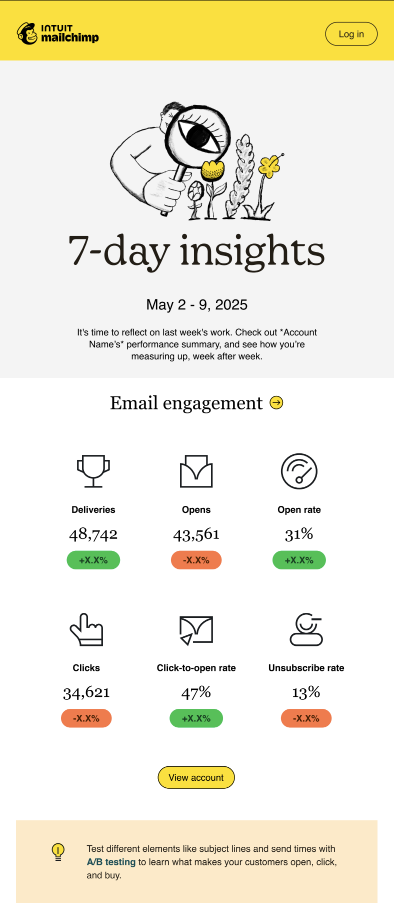
Weekly Insights Email Relaunch
Took a decade-old transactional email, with 725K+ weekly sends, and turned it into a personalized retention and customer education touch point
The Challenge: A Decade of Sameness
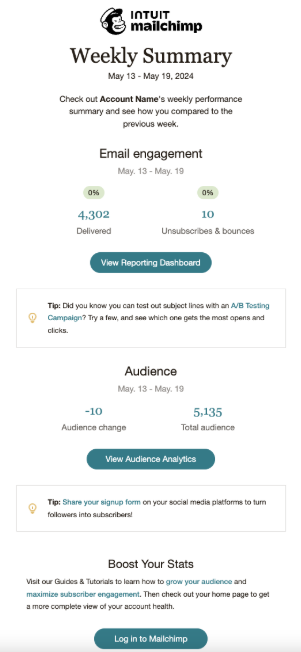
The Weekly Insights email was one of the most consistent touch points Mailchimp had with customers. It was a performance summary that sent weekly to 725K+ customers.
As part of a transactional email audit that I performed (also in this portfolio), I identified this email as our #1 target for optimization. It was a no-brainer that this could become a top retention and customer education tool.
The email had barely been touched in over a decade. It was built in Mailchimp’s transactional email system, and had no clearly defined owner. It was difficult to update without engineering help, and wasn’t being tested or measured beyond the open rate. For years, customers received the same two “tips” every week. As an email marketing company that often talked about the importance of personalization, Mailchimp had to set a better example.
My task: Migrate the email to Eloqua under lifecycle marketing ownership, partner with the creative team for a visual and tonal refresh, and inject a lot more personalization that would encourage customers to act on recommendations and stick around.
Snapshot
Company: Intuit Mailchimp
Role: Principal Marketing Manager – Lifecycle, Customer Notifications
Scope: As part of a transactional email audit, I identified the weekly insights email as a new lifecycle marketing touch point that was worth optimizing. I developed the strategy and creative/ops brief, came up with a content outline for a new tip library, coordinated cross-functional teams, and wrote an enablement guide for customer-facing teams
By the numbers:
725K+ accounts reached every week
10 dynamic email variations, up from 2 variations
45 personalized tips with trigger logic, replacing 2 tips
60+ data fields to give week-over-week comparison and personalization
1 new module to promote the SMS add-on
Strategy: Don’t Boil the Ocean
Beyond everything we wanted to do on the customer-facing side, this was a huge backend lift. The original email and all its data points lived in the Mailchimp codebase. We needed to recreate the email in a new system (Eloqua), come up with all the logic required for personalization, and connect all the pipes to ensure the data showing up in people’s inboxes was as close to real-time as possible. Oh, and Mailchimp was simultaneously migrating to a whole new data platform, so a lot of this backend communication hadn’t been tested before.
With that in mind, we didn’t want to risk doing too much before we understood what hiccups we might run into. For phase one, we were focused on the refreshed design, smarter personalization, way more tips, the new SMS data module, and a few metrics that should’ve already been part of the email (ahem, clickthrough rate).
For future phases, we’d be able to add other metrics, more tips, and important experience features, like opting in to monthly rather than weekly summaries.
One other big change for the refresh: fallbacks. We were giving up real estate if a customer didn’t have activity in every module, plus a wall of zeroes made the product look ineffective. I mapped fallback experiences for every module (like a nudge to send a campaign, a suggestion to set up SMS), so the email stayed useful and encouraged account activity.
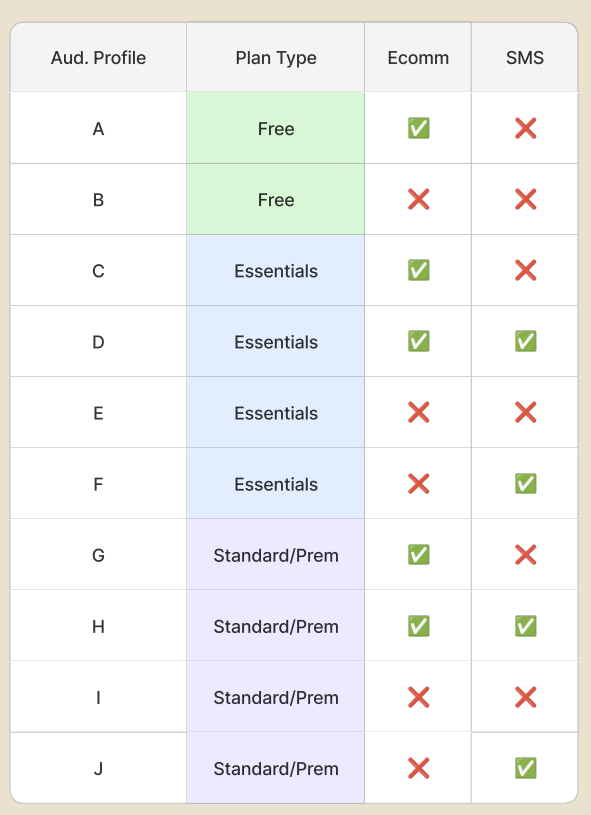
The 10 variations for our customer segments.
The Work
A personalization architecture
My strategy included 10 variations, using a combination of dynamic content and Moveable Ink. These variations were segmented by plan type, e-commerce customers, and SMS add-on status.
I had weekly meetings with:
Data ops to discuss a custom data object with 60+ fields that included all the metrics needed for the email, plus its week-over-week delta
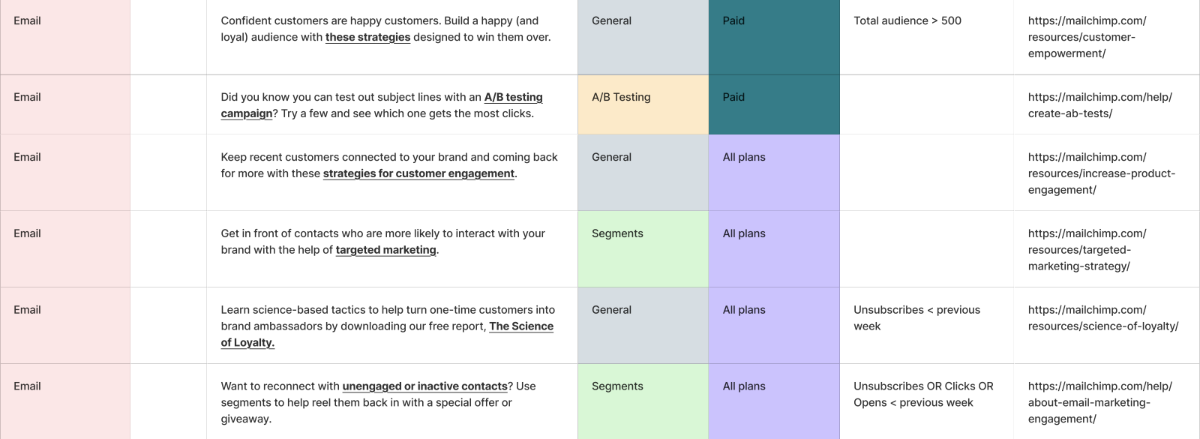
Email ops to develop an artifact for how the tips would work, where they would link, when a module would display or fallback, and more
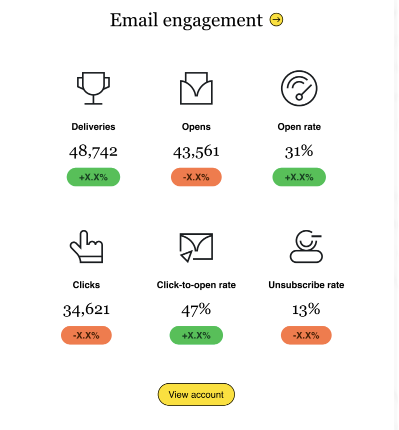
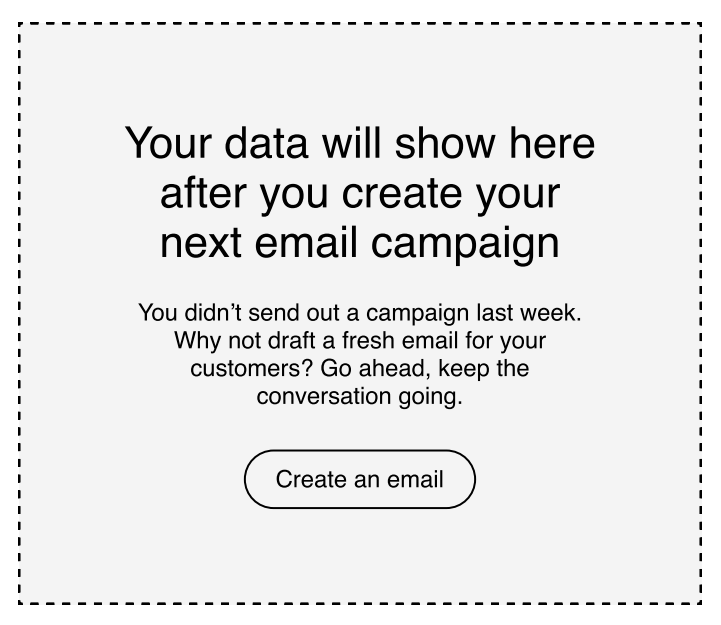
Same module, different experience depending on if a customer sent a campaign that week or not.
Tips that finally felt helpful
One of the most exciting parts of the relaunch was replacing the two ancient tips with a rotating library of 45 tips. The long-term vision was to keep expanding the library and use the tips in other transactional emails as we migrated more of them to Eloqua.
The tips had behavioral triggers built in. For example, a customer whose clicks dropped from the previous week got a tip on how to write stronger CTAs. I intentionally linked to different types of resources (help article, case studies, in-app pages) to get a sense of what customers responded to most. Because the email had a separate opt-in from our marketing emails, the big strength of these tips was the opportunity to introduce features to customers even if they were opted out of marketing emails.
Design that makes data feel fun
Working with the creative team through 4 rounds of review in Figma, we redesigned the email to still be clean and modular. The data needed to be front and center, without distractions.
Each metric would have a pill to show week-over-week change and illustrations to warm up the data. Each module would have a CTA personalized to plan type, and one helpful tip.
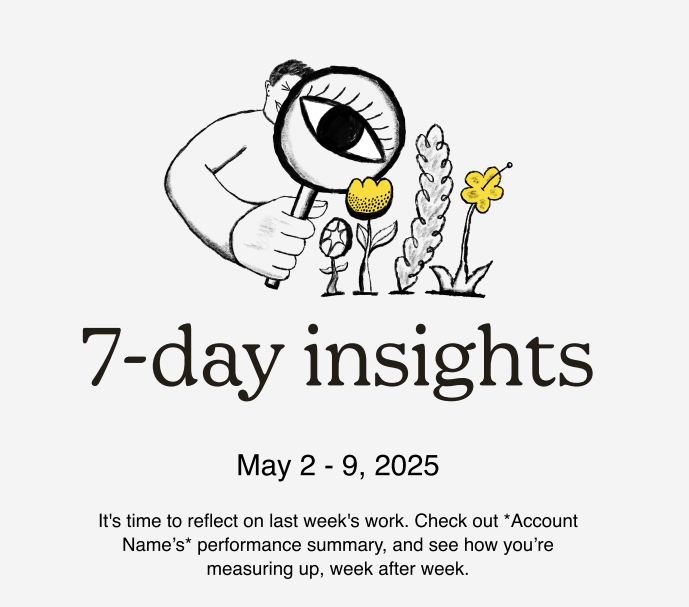
Hero image
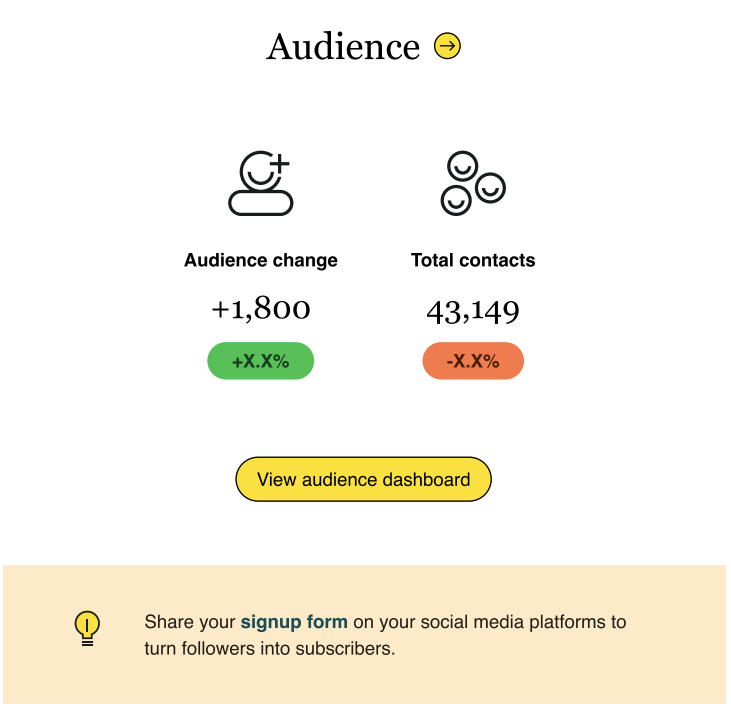
Audience module
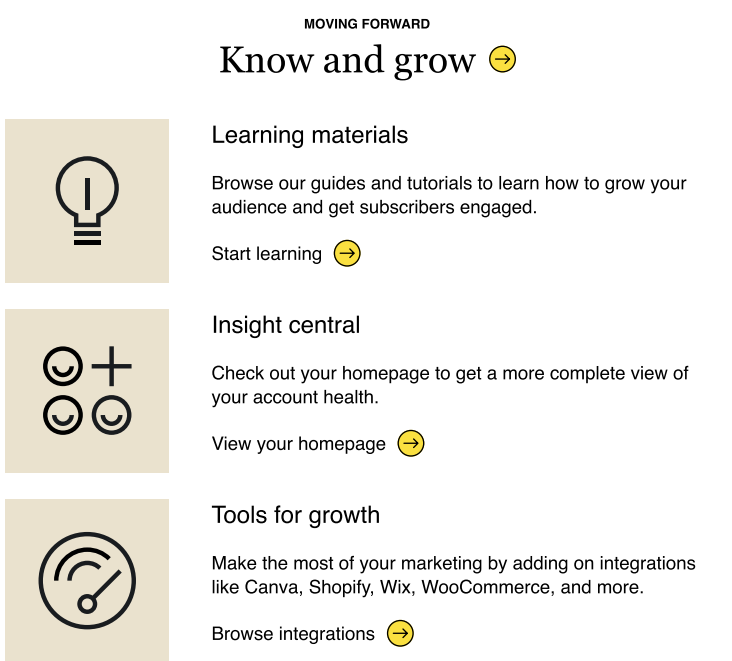
“Know and grow” footer
Setting the Launch Up to Prove Itself
Because the legacy email only had reporting for opens, I built some measurement into the relaunch. There were indicators that the original email was already not triggering appropriately every week, so we felt comfortable with the risk of doing a 10% holdout on top of our universal holdout group for 30 days (or 5 sends).
For the first time, we’d get a sense of how this email impacted retention, login behavior, and SMS upgrades. Yay!
Beyond 30 days, we would honor if a customer opted in to receive the email. We’d still monitor dynamic content, especially to see which tips drove clicks and customer action—this would help us develop content for future tips.
Given all the changes to an old email some customers had been getting for a decade, I prepared frontline teams for the transition. I wrote an enablement guide to cover what was changing, with responses for anticipated questions.
The Outcome
All 10 email variations were approved by creative and legal, the emails were built and reviewed in Eloqua, we configured the content and tip logic and began QA, and then …
A company-wide restructuring shifted resourcing away from the final data integration, and we had to pause the launch. Obviously, this was a huge disappointment for so many folks. But the work stands on its own as a documented personalization system that modernized a decade-old email into a lifecycle marketing retention touch point.